Resistance bands vs dumbbells: which is better for home workouts in 2026?
Table of contents
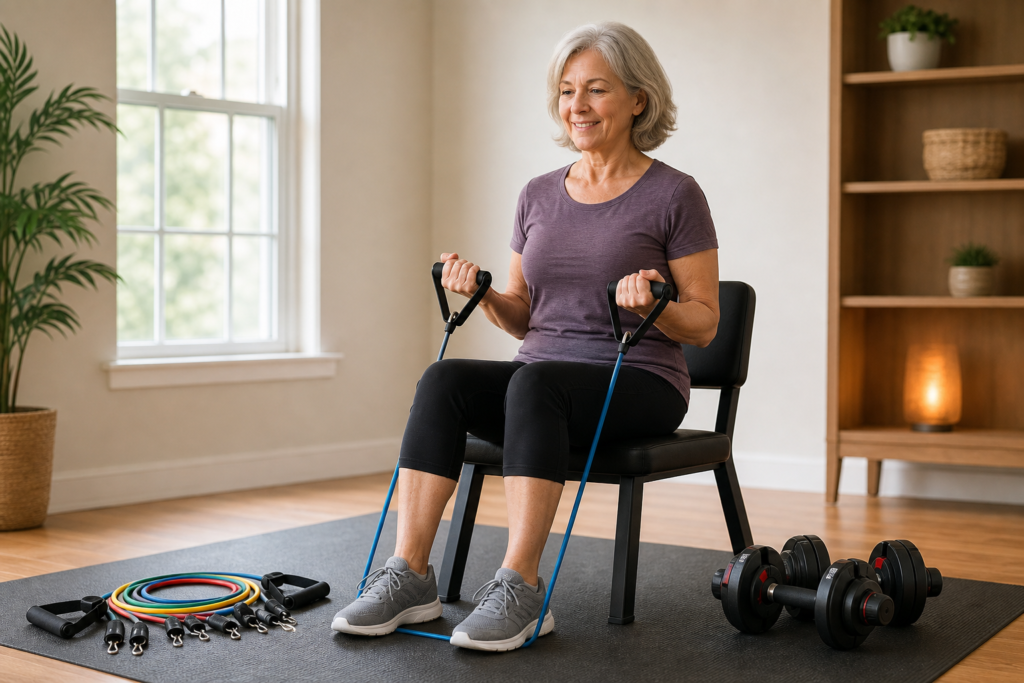
Home gyms keep getting more popular, and one question keeps coming up: should you buy resistance bands or dumbbells? both can give you a good workout, but the experience of using them is very different. What’s right for you really comes down to your space, your budget, your goals, and whether you’re willing to be patient while you make progress.

We ran a 12-week test using both, following the same training program on each. We tracked strength gains, took muscle measurements, paid attention to how our joints felt, and noted how much we actually enjoyed the sessions. Some of what we found pushed back against assumptions on both sides of the argument.
Quick comparison
Here’s where things land at a glance before we get into the detail:
- Price: resistance bands usually cost $30 to $80, while adjustable dumbbells often cost $200 to $500 or more.
- Space: bands fit in a drawer. Dumbbells need a dedicated corner.
- Muscle building: dumbbells have a slight edge for hypertrophy, while bands work well for general fitness.
- Joint comfort: bands are usually easier on the joints because the resistance changes through the movement.
- Travel: bands win clearly. A full set can weigh around 5 lbs, while dumbbells stay at home.
- Exercise variety: bands offer more setup options, especially with a door anchor.
What are resistance bands?
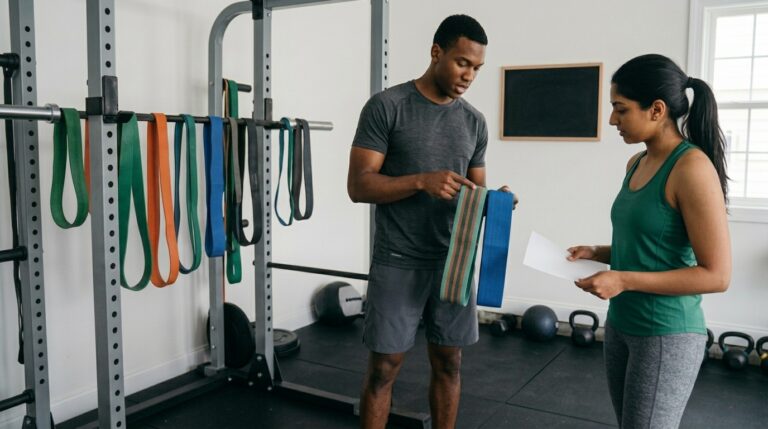
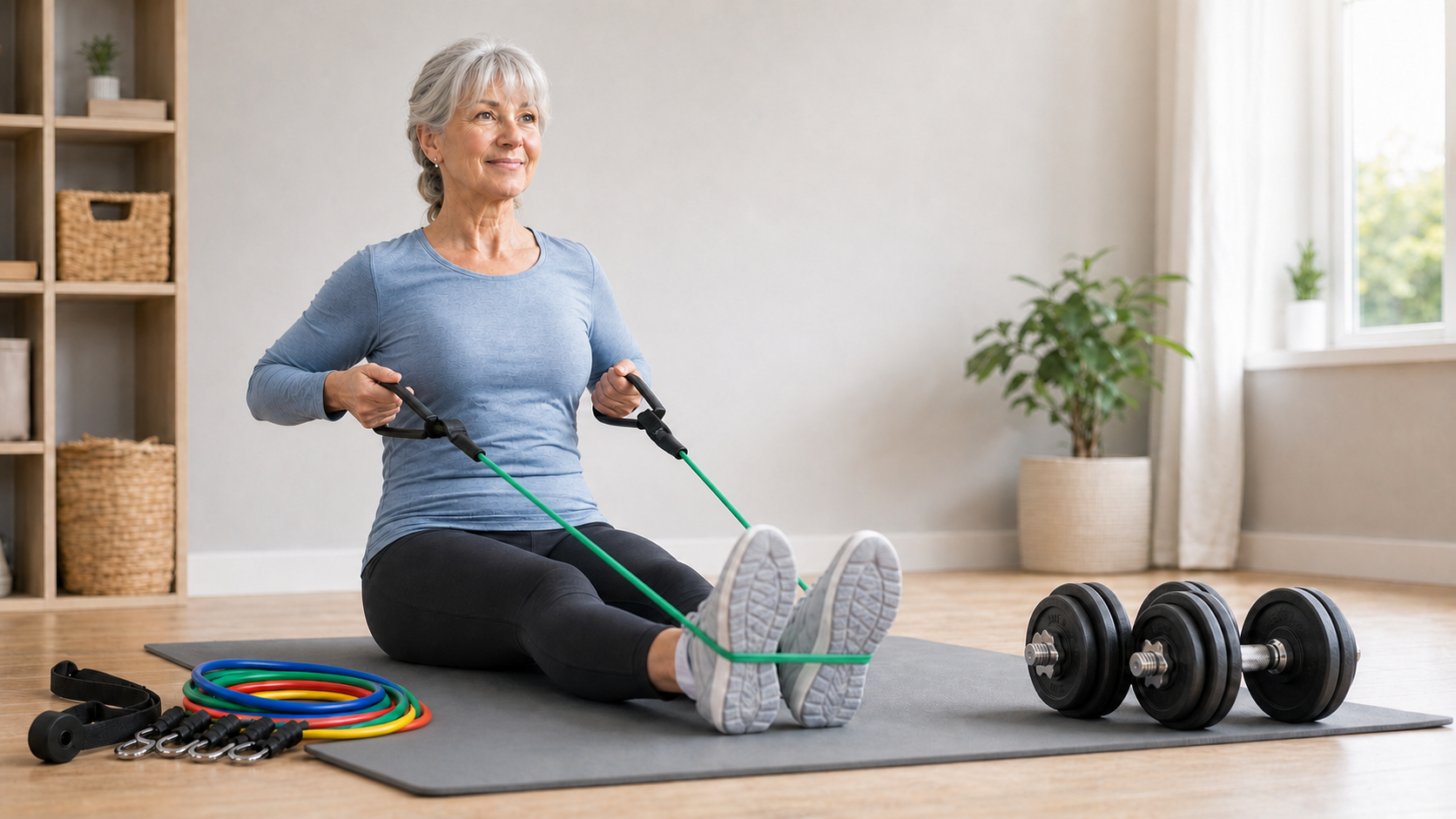
Resistance bands are elastic bands or tubes that create tension when you stretch them. A modern set usually comes with five to seven bands at different resistance levels (roughly 10 to 50+ pounds), plus handles, ankle straps, and a door anchor so you can hit the whole body.
There are a few different styles worth knowing about. Loop bands, sometimes called mini bands, are mostly used for glutes, hips, and rehab. Tube bands with handles are the most versatile and probably what most people picture when they hear “resistance bands.” Power bands are longer loops that work well for pull-up assistance and heavier strength work. Therapy bands have the lightest resistance and are a good starting point for beginners or anyone coming back from an injury.
One thing that surprises a lot of people: bands give you ascending resistance, meaning they get harder the more you stretch them. That actually lines up well with your natural strength curve, since you’re usually strongest at the end of the movement.
What are adjustable dumbbells?
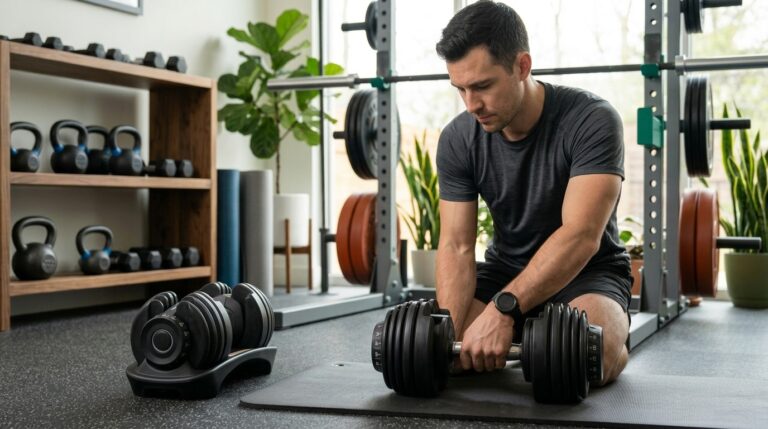
Modern adjustable dumbbells the bowflex selectTech 552 and the various powerblock models being the obvious examples use a dial system to replace something like 15 pairs of fixed-weight dumbbells. Most go from about 5 to 52.5 pounds per dumbbell, which covers nearly everything a home lifter is likely to do, and they take up a fraction of the space.
If you’re already leaning toward adjustable dumbbells, our full Bowflex SelectTech 552 review digs into the most popular option in detail. For now, let’s look at how the two systems actually stack up against each other.
Head-to-Head: 6 critical factors
1. Muscle building potential
Dumbbells have a slight advantage here, mostly because they keep resistance constant through the full range of motion. Heavy compound lifts like the bench press, rows, and overhead press also translate directly to what you’d do in a regular gym, which makes it easier to benchmark your progress.
That said, bands aren’t far behind. Research published in 2024 showed that band-only training produced roughly 85 to 90 percent of the muscle gains dumbbell training did over a 12-week stretch. For serious lifters that gap matters. For most people working out at home, it really doesn’t.
So: dumbbells win for serious muscle building. Bands win on cost-to-result.
2. Joint health and injury risk
This one isn’t close. Bands are far easier on the joints. The variable resistance makes it nearly impossible to cheat reps with momentum, and the elastic recoil takes a lot of the impact out of each movement. That’s why you’ll see them in physical therapy clinics and in the routines of older athletes.
Dumbbells, especially the heavy ones, are less forgiving. A sloppy rep with 40 pounds is a real way to tweak a shoulder, elbow, or wrist. They’re not dangerous if you know what you’re doing, but the margin for error is smaller.
Bands take this category.
3. Space requirements
A full band setup weighs maybe 5 to 10 pounds and fits in a small bag. Adjustable dumbbells, with the stand, can push past 100 pounds and need a permanent spot on the floor. If you’re in an apartment, a dorm, or any space where the gym has to share square footage with the rest of your life, this is probably the deciding factor.
4. Cost and value
A solid resistance band set costs $40 to $80. Adjustable dumbbells start around $200 and climb past $500. Strictly on dollars-per-workout, bands are five to ten times cheaper for results that are at least in the same ballpark.
The catch is durability. Bands wear out, and with regular use you’ll probably be replacing them every one to two years. A decent set of dumbbells will outlast most of your other furniture. Stretch the math out to a decade and the price gap narrows quite a bit.
5. Exercise variety
Bands are more versatile than they get credit for. With a door anchor, handles, and ankle straps you can mimic cable machine work, do lat pulldowns, and run a respectable bench press variation. There’s a surprising amount you can do once you stop thinking of them as just a warm-up tool.
Dumbbells are fantastic but a little more limited in this specific way. Without extra equipment, things like face pulls, lat pulldowns, and standing cable rows are tough to replicate. So bands take this one for total variety.
6. Travel and portability
There’s no real argument here. Resistance bands fit in carry-on luggage. Adjustable dumbbells stay home. If you travel for work or you don’t want to lose your routine every time you go on vacation, this matters.
Resistance bands vs dumbbells: the final verdict :
Resistance bands are probably the right call if you’re working with limited space, have less than $100 to spend, travel a lot, deal with joint issues or you’re still recovering from one, are newer to working out, or just want one piece of equipment that can hit the whole body.
Adjustable dumbbells make more sense if you’ve got a dedicated training space (think 10 by 10 feet or more), $300+ to put toward something long-term, serious muscle and strength goals, the expectation that you’ll be training consistently for the next five years or more, or you’re already an intermediate or advanced lifter who wants something closer to a real gym setup.
Our top recommendations for 2026
Best resistance bands: bodylastics stackable tube bands
Bodylastics makes what we think is the best stackable system out there. You can combine multiple bands for up to 142 pounds of resistance, which is plenty for actual training. They use anti-snap construction, come with a lifetime guarantee, and have a track record with Navy SEALs and pro athletes. You can check the current price on amazon here, and if you want the deeper breakdown, our complete resistance bands buying guide covers the specs in more detail.
Best adjustable dumbbells: bowflex selectTech 552
The bowflex selectTech 552 swaps 15 pairs of dumbbells for one dial-based unit. The range goes from 5 to 52.5 pounds per dumbbell, which covers somewhere around 95 percent of what most home lifters will ever need. It’s compact, well-built, and probably the safest first purchase in the category. Current Amazon pricing is here, and for the full pros and cons after six months of use, we put together a dedicated bowflex selecttech 552 review.
Best hybrid option: both, honestly
If you can swing it, owning both is the strongest home setup you can put together. Use the dumbbells for your main compound lifts bench, rows, presses and keep the bands around for accessory work, warm-ups, and the days you’re traveling. Total investment lands somewhere in the $400 to $500 range and you’re basically set.
The bottom line
After twelve weeks of testing, our take is simpler than most of the internet makes it out to be. For maybe 70 percent of people putting together a home gym beginners, busy professionals, apartment dwellers, frequent travelers resistance bands are the smarter buy. Better on space, easier on the wallet, kinder to joints, and they get you 85 to 90 percent of the way there on muscle building.
If you’re a serious lifter or you have the space and budget for it, adjustable dumbbells will give you stronger results and feel more like real training.
Buy what fits your actual life, not the home gym you wish you had time for.
Frequently asked questions
Can resistance bands really build muscle?
Yes, they can. Studies show bands produce around 85 to 90 percent of the muscle gains free weights do, as long as you apply progressive overload. They’re a legitimate strength tool, not just rehab equipment.
How long do resistance bands last?
With regular use, a quality set will last one to three years. Latex tends to degrade faster than fabric or rubber. Get in the habit of checking for cracks or weak spots before each workout, and replace any band that looks suspect.
Are adjustable dumbbells safe?
Adjustable dumbbells from the major brands bowflex, powerblock, nordictrack are very safe when used the way they’re designed to be used. The risks come from dropping them or pushing them past their specs, not from anything inherent to the design.
Smart. Fit. Healthy. | © 2026 FitSmartHealth.com | Page