How to meal prep for a week: the complete beginner’s guide (2026)
Opening the fridge after a long day and realizing you still have to decide what to cook is tiring. Meal prep solves that problem by moving some of the planning and cooking to a time that suits you.
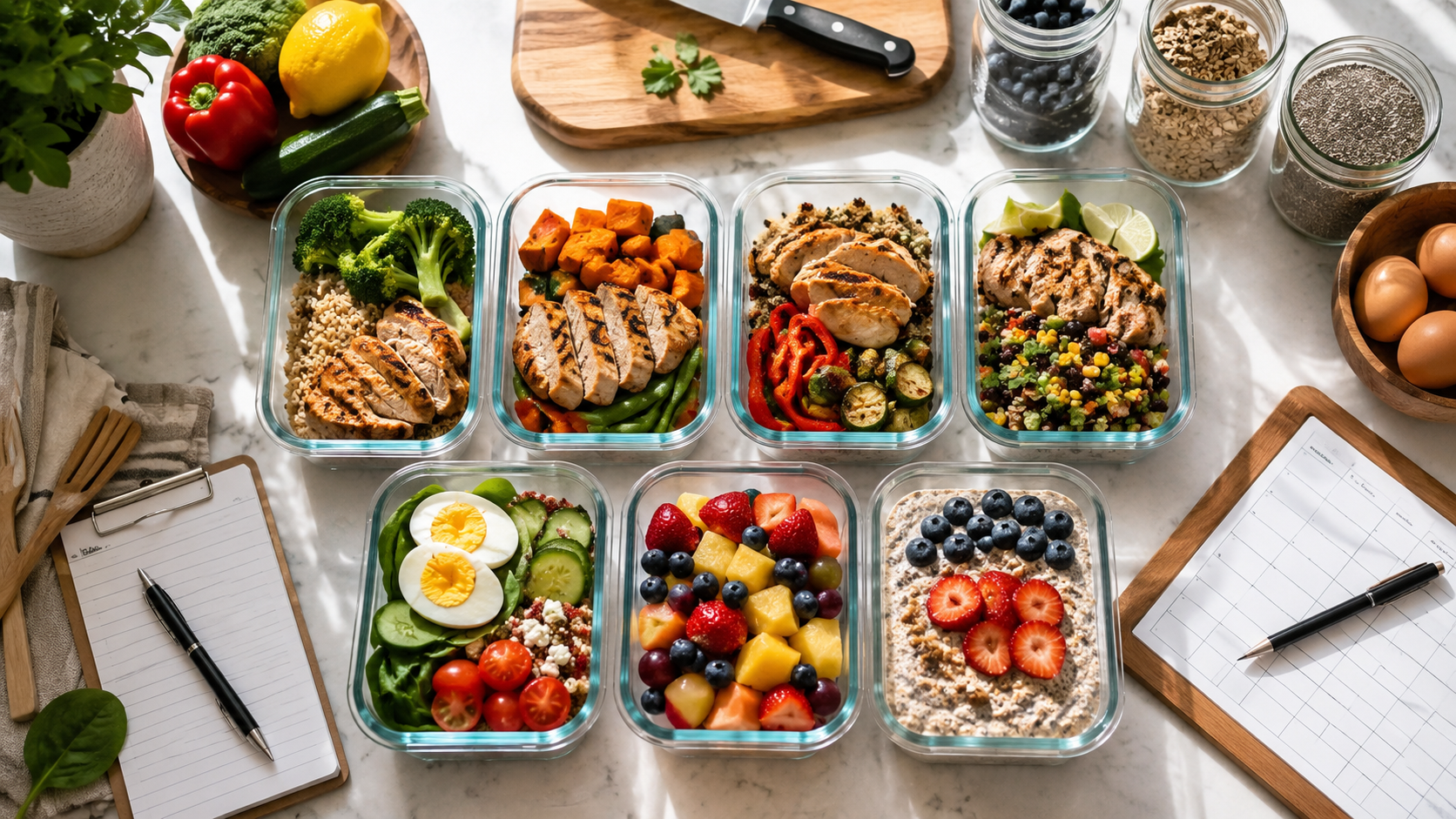
You do not need to cook 21 identical meals or spend your whole Sunday in the kitchen. A useful meal prep routine can be as simple as preparing a few lunches, cooking a grain, washing vegetables, and freezing two portions for later.
This guide explains how to meal prep for a week in a practical way, including what to plan, what to buy, how to store food, and how to keep meals from becoming repetitive.
Disclosure: Some links on this site may be affiliate links. If you buy through one of them, we may earn a commission at no extra cost to you.
In this guide
- What meal prep actually means
- How to meal prep for a week
- A realistic prep session
- Foods that hold up well
- Food storage and safety
- How to avoid boring meals
- Common meal prep mistakes
- Frequently asked questions
What meal prep actually means
Meal prep is the process of planning and preparing food before you need it. The amount of work you do in advance depends on your schedule and how much variety you want during the week.
There are four common approaches:
- Batch cooking: Cook larger amounts of a few ingredients, then combine them in different ways.
- Complete meals: Cook and portion full breakfasts, lunches, or dinners that only need reheating.
- Ingredient prep: Wash, chop, marinate, or partially cook ingredients so daily cooking is faster.
- Freezer prep: Freeze cooked meals or assembled ingredients for busy days later in the month.
Most people do best with a mix. You might portion lunches, prepare vegetables for dinner, and freeze a pot of chili instead of relying on one method for every meal.
How to meal prep for a week
1. Check your schedule
Start with the week ahead. Mark the days when you will eat at home, take lunch to work, or have very little time to cook. There is no reason to prepare dinner for a night when you already have plans.
For a first attempt, prepare three lunches and two dinners. This is enough to make the week easier without filling the fridge with food you may not finish.
2. Choose meals that share ingredients
Pick recipes with some overlap. Shared ingredients reduce the shopping list and make prep faster, but the meals can still taste different.
For example, roasted chicken can be used in a rice bowl, a wrap, and a salad. Roasted peppers and onions can go into the same meals, while different sauces change the flavor.
A simple weekly plan might include:
- Overnight oats or eggs for breakfast
- Chicken and rice bowls for lunch
- Chili, soup, or pasta for dinner
- Fruit, yogurt, nuts, or chopped vegetables for snacks
3. Build balanced meals
A basic meal is easier to plan when you divide it into a few parts:
- A protein source, such as chicken, fish, eggs, beans, lentils, tofu, or yogurt. If you use protein powder, compare the options in our whey and plant protein guide.
- A carbohydrate, such as rice, potatoes, oats, pasta, quinoa, or bread
- Vegetables or fruit
- A small amount of fat from olive oil, avocado, nuts, seeds, or cheese
You do not need to weigh every ingredient. Adjust portions to your appetite, activity level, and any advice you have received from a qualified health professional.
4. Make a focused shopping list
Check the pantry and freezer before shopping. Then organize your list by section so you are less likely to forget something or buy duplicates.
- Proteins
- Grains and starches
- Vegetables and fruit
- Dairy or alternatives
- Sauces, herbs, and spices
- Containers or freezer bags, if needed
5. Cook in a sensible order
Begin with the foods that take the longest. Put a tray of vegetables in the oven, start rice or potatoes, and simmer a soup or sauce. While those cook, prepare quicker items such as eggs, salad ingredients, or snacks.
Using the oven, stove, and chopping board efficiently can turn several separate recipes into one organized cooking session. Clean as you go so the kitchen does not become the hardest part of the job.
6. Cool, portion, and label
Divide food into portions that match how you plan to use it. Keep sauces and crunchy toppings separate when possible. This helps salads, wraps, and grain bowls stay fresh.
Label freezer containers with the meal and date. Put meals for the first few days in the refrigerator and freeze portions intended for later in the week.
A realistic prep session
This example takes about two hours, depending on the recipes and your kitchen:
- Cook rice or quinoa and roast a tray of vegetables.
- Bake chicken or tofu with a simple seasoning.
- Prepare a pot of chili, lentil soup, or pasta sauce.
- Mix two sauces or dressings for variety.
- Wash fruit and prepare a few grab and go snacks.
- Portion three lunches and freeze two dinner servings.
During the week, use the remaining ingredients for fresh combinations. A rice bowl can become a wrap the next day, and roasted vegetables can be added to eggs, pasta, or salad.
Foods that hold up well
Some foods keep their texture better than others. Good choices include roasted vegetables, cooked grains, beans, lentils, soups, stews, chili, firm pasta, baked chicken, tofu, and hard boiled eggs.
Delicate greens, sliced avocado, crispy toppings, and cut tomatoes are usually better added shortly before eating. Store dressings separately to prevent salads from becoming soggy.
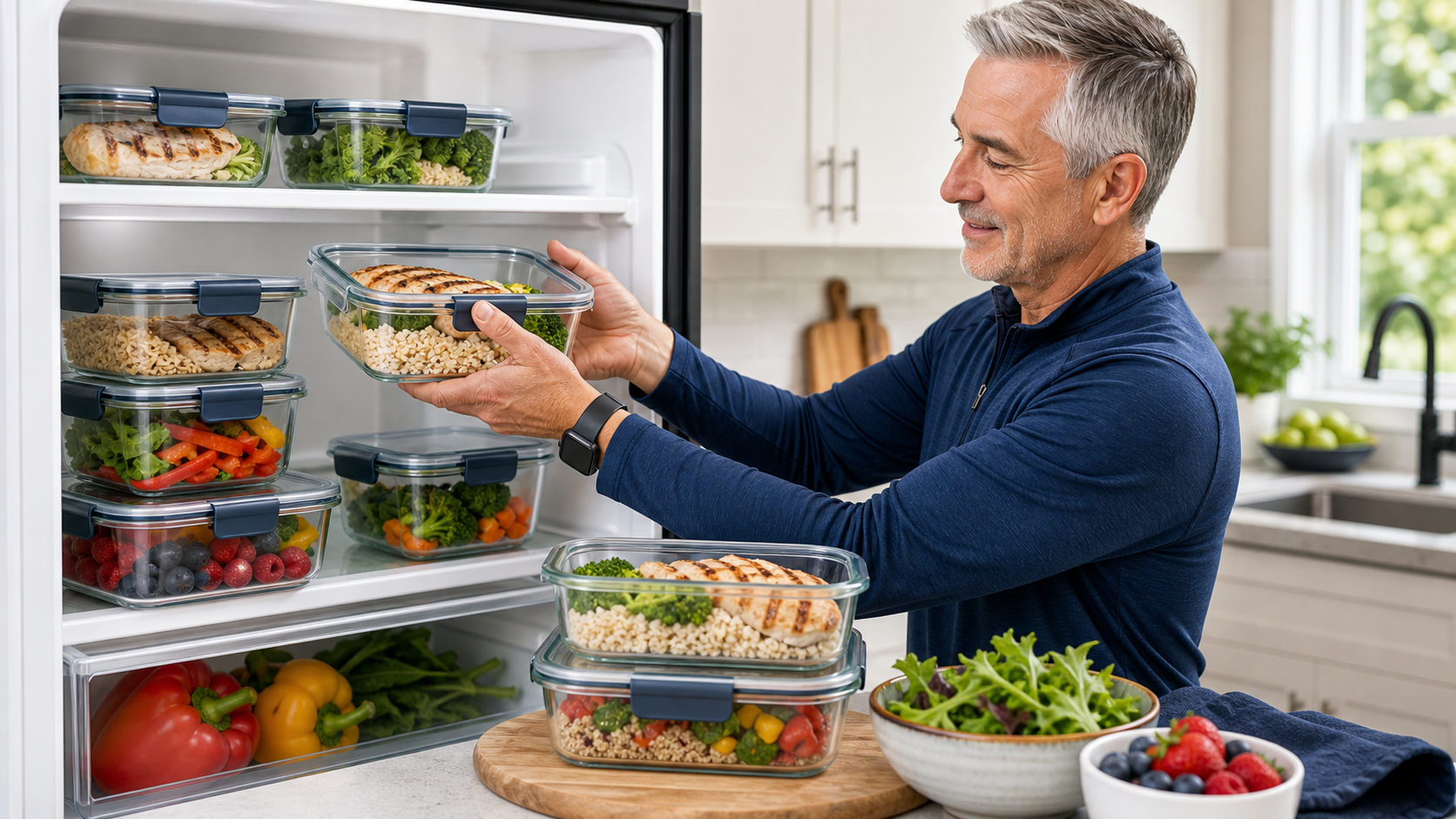
Food storage and safety
Good storage matters as much as good cooking. Use clean containers with tight lids and refrigerate cooked food promptly. For container materials, sizes, and practical buying tips, see our guide to glass meal prep containers.
The USDA recommends using most cooked leftovers within three to four days. Freeze any portions you will not eat in that time. If a meal smells unusual, has changed texture, or you are unsure how long it has been stored, discard it.
When reheating, make sure the food is hot throughout. Follow the storage directions on packaged ingredients and use extra care with seafood, rice, eggs, and poultry.
How to avoid boring meals
Variety does not require cooking a different recipe every day. Keep the base simple and change the finishing ingredients.
- Use salsa and lime for one bowl, then tahini and herbs for another.
- Serve the same protein with rice one day and in a wrap the next.
- Freeze half of a large recipe instead of eating it five days in a row.
- Keep one meal unplanned so you can use leftovers or eat something spontaneous.
Common meal prep mistakes
- Preparing too much: Start small and learn how much food you actually eat.
- Choosing too many recipes: Two main dishes are often enough for a beginner.
- Ignoring texture: Store wet ingredients and crunchy toppings separately.
- Forgetting the freezer: Freezing later portions keeps them safer and gives you more flexibility.
- Buying without a plan: A short menu prevents wasted ingredients and impulse purchases.
- Making meals you do not enjoy: Convenience will not help if you dislike the food.
Is meal prep right for everyone?
Meal prep can work for students, families, busy professionals, and people with fitness goals, but the routine should fit the person. Some people like fully portioned meals. Others prefer to prepare ingredients and cook a fresh dinner in 15 minutes.
If your schedule changes often, prepare flexible ingredients rather than a rigid seven day menu. If you have specific medical or nutrition needs, use advice from a registered dietitian or another qualified professional.
Frequently asked questions
Do I need special containers?
No. Any clean, food safe container with a secure lid can work. Clear containers make it easier to see what is available, and freezer safe containers are useful for later portions.
Should I prep every meal?
Not necessarily. Preparing the meals that cause the most stress often gives the biggest benefit. For many people, that means weekday lunches and one or two dinners.
Can I meal prep without eating the same thing every day?
Yes. Prepare a few flexible ingredients and vary the sauce, seasoning, grain, or way you serve them. This keeps the workload manageable without making every meal identical.
Start with one easier week
Your first meal prep does not need to be perfect. Choose a few meals you already enjoy, prepare enough for three or four days, and note what worked. The next week, adjust the portions, timing, and recipes based on what you actually used.
A routine that saves you time and fits your appetite is more useful than an ambitious plan you cannot maintain.